Why Medicine?

Q (from ask.fm): Why do you want to become a doctor? Did you ever consider any other profession?

For a time in my life (primarily during the med school application and interview process) I HATED this question simply because I was asked it oh so often. But really I LOVE this question. I love it because it makes me sit back and think about why I’m doing what I’m doing.

I’ve seen the quote “Medicine is for those who couldn’t imagine doing anything else.” by Luanda Grazette spread throughout twitter and time again by premeds and med students alike, and I simply do not agree. At least with respect to my own situation.

Since I have begun seriously considering my future (which started in late elementary school since I have always been nearly too obsessed with planning out my future), my career goals have consisted primarily of medicine, pharmacy, and research though at a younger age interior design and architecture were also top candidates. During this time, politics and business leadership also drew my attention briefly because I felt I could make a difference in those positions.

Making a difference. That’s the source of all of these career goals (minus architecture and interior design… I just wanted to make pretty houses). In medicine and pharmacy, I could make a difference in individuals’ lives through improving their health. In research, I could potentially discover something that would make a difference in our fundamental knowledge that could be applied to making a difference in many lives. In politics, I could make a difference by instituting policies that had a larger benefit for the nation with special interest in healthcare policy. And in business leadership, I could help bring a company success and target the goals of the increased revenue to giving back to others with particular interest in nonprofit charitable organizations.

As I explored these career options, my interests became more refined but I took something from each one. My interest in pharmacy holds true as I hope to have my research relate to the development of therapies. My interest in politics holds true as I am still particularly interested in healthcare policy and hope to be able to use my position as a doctor to educate others and make a difference in the way our healthcare system is set up. My interest in leadership holds true as I take the leadership skills for business and apply them to some day running my own lab. In fact, it is pursuing these other interests that I believe will make me a stronger doctor.

So why medicine specifically? First of all, the human body is beautifully complex and it is an amazing challenge to understand and seek to control its processes and especially its pathology. It is a challenge that I find absolutely invigorating and I believe it will keep me enthused about my work until the day I die. Second, it connects me to others and gives purpose to my work. It allows me to help others achieve their most basic need – good health.

I can imagine myself doing many things, but I have CHOSEN medicine because it is simply the best choice for me.

Why I majored in chemistry

Q (From ask.fm): Why did you choose to major in chem? What did you plan to do with your chem degree?

In high school, I wanted to do pharmacy. I shadowed a pharmacist and she told me that chemistry was very important to know as a pharmacist. So, I began by taking AP chemistry in high school and I fell in love with the topic.

AP chemistry 1When it came to choosing my college major, I actually intended in following in my older brother’s footsteps of majoring in both chemistry and biochemistry because I knew that biochemistry would be applicable to my future. As I could only list one major as my top choice on my application, I just randomly put chemistry first and biochemistry second, and ended up getting placed in the College of Science and Engineering with the intention of majoring in chemistry.

I hoped to then add on the biochemistry major as well, but with it being in a different college, the College of Biological Sciences, it was a challenge to meet the requirements of both colleges and complete both degrees in four years. Therefore, I decided that instead of actually adding in the second major, I would simply take all of the upper level classes related to biochemistry/biology as I desired to know what their upper division students know without their excessive introduction to biology courses.

Throughout college, my interests shifted from pharmacy as a professional career to research pertaining to the development of therapies and further to clinical medicine to complement that research. It was that interest in therapies that kept my interest in the chemistry major as chemistry is the basis for drug design. I knew I would later be able to shift my primary focus to more biological sciences but I believed the background in chemistry would make me a better biologist.

While I’m no longer doing just straight-up chemistry, I do not regret the decision to keep that as my major. I’m lucky that my university was flexible and allowed me to take classes outside my major rather freely, so that I was able to have a broad education in the physical and biological sciences that well prepared me for my future.

Chemistry Senior

Why I Switched Thesis Labs in Graduate School

A year ago, I began graduate school. I can recall sitting, bright eyed and bushy tailed, in an auditorium with my fellow first years as our director of graduate studies greeted us and told us about the challenge we were about to undertake. He offered words of wisdom like “Look at those around you and get to know them for one day they can become your colleagues and collaborators no matter where life takes you – academia, industry, and beyond,” and “Your choice in thesis lab is essential for your success.”

This was the first time we were told how to pick a thesis lab, but it was certainly not the last, not even from him. “Not all advisors are equal,” he warned us, “And one who might be a good advisor for one student may not be a good advisor for another student.” There are many things to consider when picking an advisor – the size of the lab, funding, the style of mentorship, the advisor’s personality, the lab’s productivity – but there was one thing he emphasized. “DO NOT pick a lab for the science. Graduate school is a time to learn to be a researcher. You have the rest of your life to do the science you want to do.”

But I didn’t listen.

During undergrad, I had decided that I wanted to do research related to cancer – more specifically, research that had a rather direct contribution to therapeutic development. I narrowed down my lab options to those with a therapeutic focus and ultimately joined a lab that studied immunotherapy, an area that I was incredibly excited about.

Unfortunately, the small lab didn’t have its “bread and butter” research, an established focus of its research efforts. But I didn’t care. During my rotation in the lab, I had designed a project to start from scratch and formed a collaborative mentorship team to help me with it. At the time, I didn’t appreciate the risk that came from starting a brand new project that neither of my mentors was well versed in. I did know there were some risks from joining the lab, though, with a history of students taking seven or eight years to complete a PhD, but I had chosen the program for the freedom to get a more extensive research experience than at MSTPs where students normally take only three or four years for a PhD and was at the time willing to take on a longer project.

Over the next eight months, I became more aware of the longevity of the training ahead of me while at the same time my project was taking its sweet time to start. Though frustrated at times with lack of progress and mentoring, I was determined to make it work. Convinced by others including my other mentor that I would be a good fellowship candidate, I devoted the summer after my first year to preparing a research proposal and associated materials for an extensive fellowship application from the NIH only to have my other mentor tell me days before submitting that not only was the proposal not ready, the project would not be suitable for a timely PhD. This was followed by the question, “Are you happy?”

My first answer was yes, of course. I thought immunotherapy was an amazing field, and I was ecstatic to be learning about it, hoping to devote my career to it. My lab mates were great. I had a good relationship with my advisor. My project, if it worked, I felt would likely be a valuable finding, and I wanted to see it out. But… my project wasn’t really going anywhere at the moment, my advisor didn’t have the expertise needed to help me with it, and while my other mentor did work with many of the techniques, some of what I proposed was even outside his expertise. Starting this project from scratch likely meant that my PhD was going to take much longer than the five years I hoped, and unfortunately, any other project I would do in the lab would also be started from scratch. With an anticipated nine years of education following graduate school (three to finish medical school, three for residency, and three for fellowship), I no longer wished to risk such a long PhD; therefore, an alternative option was to switch labs.

I had never realized how common it was to switch labs in graduate school. It is said that 20 to 30 percent of students end up switching, and as I thought of the people I knew who switched, I began to really believe those numbers. One friend switched three months after joining his lab because the professor turned out to be crazy (to put it nicely). Another switched eight months after joining because he didn’t fit well with the lab. A third switched after nearly two years when her qualifying exam went poorly and she realized her professor was just not providing the mentorship support that she needed. I also heard cases when graduate students had actually been kicked out of their labs as well and had to find another lab. Sometimes these switches occurred even later into their third, fourth, or fifth years. I was glad to be considering switching just one year into the program.

When it comes to switching labs, a challenge is to find a new lab (which is a must before telling your current advisor that you want to switch). Luckily, I have maintained contact with professors other than my own advisor throughout my first year. Therefore, when it came to looking for a new lab, I already had others where I knew the professor and would be comfortable joining their lab. The one I knew best was my other mentor for my project, but he did not work with cancer. On the other hand, his wife who I also knew well studies the liver with part of her lab focused on liver cancer. Since their labs work together and I did my last rotation in his lab, I knew I would fit in her lab. Also, unlike my first lab, she has more projects available than people to do them, and she was eager for more students. As she told me about all of the projects available, I was convinced that I would be more productive in her lab.

The biggest challenge was then to talk about my situation with my advisor. I have the utmost respect for him and was nervous to tell him that I no longer wished to be in his lab. When we spoke after being told that I should not submit my application, he told me that he had just written in my recommendation that I dealt with roadblocks well. As I had contemplated switching labs, I wondered if this would still hold true should I switch or would I be taking the easy way out? Would I be letting him down? My friends reminded me that when it comes to your future, you should never be ashamed to be selfish and do what you feel is best for you. I knew this switch was what I needed.

My advisor had been on vacation, giving me time to contemplate this whole situation. When he returned, I went to his office to talk. First we talked about what other projects I could do in the lab because I really did want to give the lab a chance. As we exhausted possible projects, though, none stood out to me as being able to provide the productive research experience I would receive in the other lab. I then suggested that an alternative option was for me to switch labs. To my relief, he was incredibly receptive, wanting whatever is best for me. I couldn’t have imagined it going any better. I’m sad to leave, but I’m glad to be leaving on such amicable terms.

Later that day, I saw the director of my graduate program speaking to a room of new students. I smiled for I, too, was bright eyed and bushy tailed just like them – just like I had been the year before – eager to get started in my new thesis lab. Perhaps someday I will again focus my efforts on immunotherapy, but for now I will still get to study cancer in lab where I have a better chance of completing a productive and timely PhD.

Activities for Medical School – Which are important?

Q (from ask.fm): I will be applying to medical school in the next few years and I was wondering how to keep track of my activities. What activities are “important”? What are med schools looking for? How far should I go back (i.e. high school, summer vacations, etc.?) How should I organize the info for AMCAS? 

The activities that are important for your medical school application are most importantly the activities that are important to you. They’re activities that can reveal something about your character and they’re activities that you’ve devoted yourself to, perhaps even by taking a leadership position. These don’t necessarily all have to be medically related. For example, I was in marching band, pep band, and a sorority. I listed all of those on my application and selected marching band as one of y most meaningful activities. Medical school admissions committees want to see that you can be devoted to something, which I sure did by becoming a leader in the band and president in the sorority.

While not all of your activities have to be medically related, it is a good idea to shadow doctors, volunteer at a hospital, or find another activity that can give you first hand exposure to the kind of work that you’ll be doing as a doctor. These experiences won’t just add to your list of activities, they can help you get stories to include in your application essays and interviews that will strengthen your argument for why you want to be a doctor. Medical school admissions committees will want to see that you’re aware of what you’re getting yourself into.

As for how far to go back, medical school admissions committees generally only care about what you did since you started undergrad.That being said, I did include some activities from high school only because I continued to be involved in them throughout college such as volunteering at a hospital, which I began early in high school and continued until the end of undergrad. General rule of thumb, if it ended before you started undergrad, don’t include it unless it’s really good.

Also, note that the work/activities section is for just that – not hobbies.

To keep track of your activities, you can write a curriculum vitae (CV, basically a longer version of a resume) and save it to your computer. Then you can periodically go back to update it (google “curriculum vitae” and you can find some good resources on how to make one). With each activity on your CV, it would be good to include a description of the activity and how you were involved in it so that you won’t forget. This can be useful for other areas as well such as to give to a letter of recommendation writer so that they can know more about you and write a stronger letter.

What kinds of activities are MD/PhD programs looking for that varies from regular med school (except research of course)? Does volunteerism, clubs, travel, etc. matter as much for MD/PhD? Also, what “counts” as a publication & what’s worth including on your resume?

Generally, MD/PhD programs require that the medical school admissions committee accepts you in addition to the MD/PhD admissions committee. This means that you need to woo the general medical school admissions as well, which will be easier if you have more activities than just research.

For any admissions committee, there are no set requirements for things such as activities. All of the admissions committees that I’ve ever experienced look at each applicant as a whole rather than checking your activities off a list to make sure you’ve fulfilled different categories of activities. If your activities can show the committee that you know what you’re getting yourself into such as through volunteering at a hospital, you can be highly devoted to something such as being highly involved in at least one organization for an extended time, and you enjoy taking care of others, it doesn’t matter what specifically are these activities.

While a solid research experience is essential for MD/PhD admissions (generally, at least an equivalent of a year of full time research is expected), simply working in a lab can be enhanced if you have something to show for it. For example, I was awarded a summer research fellowship and an undergraduate grant for doing research in undergrad. This showed that I had enough promise to get rewarded for my work.

Another way to enhance your research experience is to be published. Generally, in science and medicine, a publication is any paper in which you’re named as an author and is published in a peer-reviewed journal. Getting your name on a paper shows that you’re not only being exposed to research but you’re being productive enough to contribute to a paper. But don’t worry; a lot of people don’t have any papers published by the time they apply to medical school.

I’ve also been asked what extracurriculars I included in my application. Therefore, here they are:

(*Most meaningful)

Volunteering at a hospital*

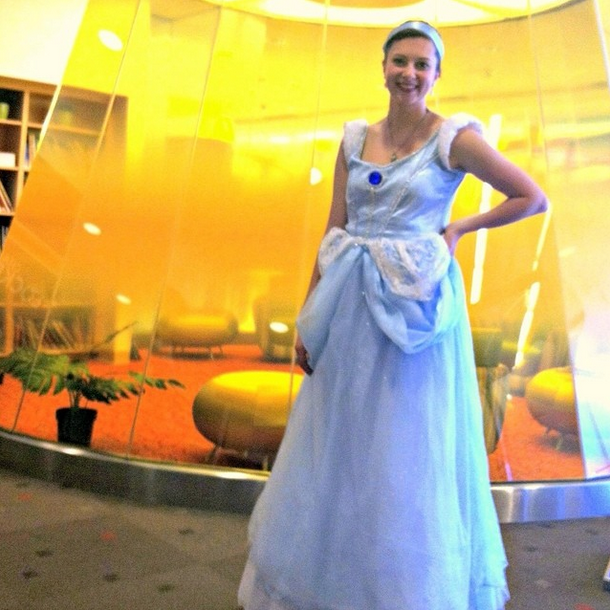
Visiting kids in the hospital as Cinderella on my 7th anniversary as a hospital volunteer. Instagram: MDPhDToBe, June 26, 2014
Visiting kids in the hospital as Cinderella on my 7th anniversary as a hospital volunteer.
Instagram: MDPhDToBe, June 26, 2014

University of Minnesota Men’s Hockey Pep Band

Research in a genetic engineering lab

Working as a cashier at Target

Receiving an undergraduate research fellowship

Earning an undergraduate research grant

Being a leader in a sorority

Working as a receptionist in an apartment building

Research in a medicinal chemistry lab*

Cancer and Cardiovascular Research Building Instagram: MDPhDToBe, August 4, 2013
Cancer and Cardiovascular Research Building
Instagram: MDPhDToBe, August 4, 2013

Being a leader in the University of Minnesota Marching Band*

Minnesota Marching Band Instagram: MDPhDToBe, September 27, 2013
Minnesota Marching Band
Instagram: MDPhDToBe, September 27, 2013

Why I Blog and a Big Thank You to My Readers!

Q (from ask.fm): What inspired you to start your blog? Also how did you start it?

A: I’ve never considered myself a person who liked to write. I took AP literature and composition in high school but I’m still not sure why I decided to do so. Writing lab reports and papers for class was a long process and was not one of my favorites. Otherwise, I didn’t take a writing course until senior year of college.

Two summers ago, I was working on my medical school application and writing like crazy to make my personal statements the best they could be. As this process wore on, I could really see my story come alive in my writing, and it was a great feeling to express myself in that way. When it was done, I wanted to keep writing.

During that summer, I also made the twitter account that you now know as ‎@MDPhDToBe (though at the time it was anonymous and went by ‎@PreMDPhDLife). As I followed many medical students and pre-meds, I noticed some of the medical students had blogs and I thought that would be a great idea to share my experience, help others who aspire to go to medical school and give myself more opportunity to write!

To make my blog, I simply did a Google search for blog hosts. I looked into a few and ultimately decided that WordPress was my favorite. The rest was simple – I used the website’s templates and customization features to make the design look how I wanted, I began writing, and I promoted my work to my twitter community. My first blog went by premdphdlife.wordpress.com, but after being accepted to my MD/PhD program, I created mdphdtobe.com to better fit my perspective. This blog was created in March 2013.

Now, after a 16 months of blogging at mdphdtobe.com, I’m ecstatic to have over 100 followers and nearly 20,000 views coming from 100 different countries! I never expected to get much traffic to the site, so I am deeply humbled by the attention it has received. A big THANK YOU to everyone who takes the time to check out my writing, especially those who have gone above and beyond to actually follow my blog! You make blogging that much more enjoyable. 🙂

Screen Shot 2014-08-08 at 1.18.04 PM

Time Balance as a MD/PhD Student

Q (from ask.fm): As a MD/PhD student, do you have any time for yourself? For family and friends? To just take a break? I would like to do a MD/PhD program, but I want to enjoy my 20s…

A: Of course you have time! I fully want to enjoy my 20’s as well so even if I don’t feel like I have time, I MAKE time to enjoy it. When you’re in the graduate portion of your PhD, your free time is really based on how much your PI will push you (or how much you push yourself). It is an important consideration when you pick a lab. If the PI is understanding and aware that people are not robots who just work 24 hours a day to produce data, then you should be granted the time that you need. In fact, I’ve had PI’s tell me to go home because I’m in lab too late or I’m there on a weekend!

I actually just read a blog post today about this culture of pushing scientists too far (in response to a sad situation), and a particular quote from it stood out to me:

“The best (and more importantly, happiest) scientists I know are people who are interested in many things, who approach all aspects of their lives with engagement, purpose and openness.”

There seems to be a cultural shift away from pushing students too hard, which makes me glad. Obviously, we want to be successful and have a lot expected of us (which only increases as we progress through our careers), but we have to appreciate our own limits as well.

As someone who enjoys writing for fun, watching sports games, enjoying my weekend nights out with friends, going home to see family and friends (which requires an eight hour drive one way for me right now), playing musical instruments, and many more leisurely activities, I believe that doing so makes me better at what I do by keeping me happy and healthy. I believe that everyone can make time to have a life if they work hard enough to do so. Not only that, I also believe that they all SHOULD. It may take a little work to figure out how to balance everything, but it can be done and it is definitely worth it. As long as you find a program and an advisor that understands that you need to have a life outside of school, you will have the time that you need.