How do MD/PhD programs differ?

Not all MD/PhD programs are the same.

According to the Association of American Medical Colleges, there are 125 schools that offer MD/PhD training in the United States. There are also a few DO/PhD programs, though I could not find a comprehensive list of these.

These programs vary quite a bit. I was certainly not aware of all of the things to consider when deciding where to apply for MD/PhD training. This is just a general overview of some of the major ways programs can differ based on what I know and is by no means a comprehensive list of the variations that you’ll find.

Structure

The “assumed” structure of a MD/PhD program is what we call a 2-4-2. This means that students take the first 2 pre-clinical years of medical school, take USMLE Step 1, then take a break from medical school to complete their PhD in hopefully 4 years (sometimes more, sometimes less), and after that they return to medical school to complete their 2 clinical years.

I say the “assumed” structure because my MD/PhD program is one of those that is quite different. We begin with our PhD and progress through our PhD training on the same timeline as PhD-only students, except that we also take the first year of medical school decompressed during that time. Check out my post My MD-PhD timeline for how that worked out for me. Only after completing our PhD do we continue with our second year of medical school, take the Step 1 exam, and then go on to our 2 clinical years of medical school.

I have not heard of another school that does it quite like mine, but I have heard of one that has students take their first year of medical school all at once, then take a break for their PhD, then return to do their last 3 years like my school.

While some schools – like mine – frontload research training in their MD/PhD program, others have a structure that puts more medical training before students do their PhD. As some schools are shortening their pre-clinical curriculum to 1.5 years, students are able to complete a couple clinical clerkships to solidify their medical knowledge before transitioning to their PhD phase. Other schools have students complete the first 3 years of medical school (through their core 3rd year clerkships) before doing their PhD and returning for their 4th year of medical school.

There’s pros and cons to all of these approaches. I liked doing more research first so that I could approach my medical training from a research perspective. Now that I’ve done more medical training, I feel like it also would have been nice to have at least the first 2 years of medical school done before doing my PhD so that I could approach my research from a more clinical perspective. This is why it is important to research all of the schools you’re considering and, importantly, try to talk to students at those schools to find out what they think about their program. Regardless, all of these should, on average, take 8 years to complete.

Size

MD/PhD programs also dramatically differ by size. So, depending on where you go, you may or may not be part of a large community of students going through the same challenge of being both a medical student and graduate student. Of the 125 schools on the AAMC list, some of these have quite large MD/PhD programs. For example, Washington University in St. Louis has approximately 200 MD/PhD students. On the other hand, some of the schools listed only have a listed option for students to do a MD/PhD training without any listed students in the program on their webpage.

I began in a cohort of 10 MD/PhD students. At the time, my program had 120+ students overall and had been training MD/PhD students since the 1970s (so we had a large alumni network). I enjoyed having this larger community. With 125 students in the M1 class, it meant that there was at least a few other people in the room who understood the challenges of balancing MD and PhD training. We have had yearly retreats to facilitate community building and collaboration across the campus. These have slowly shrunk in size due to our campus of our college of medicine closing down, but our sense of community remains. I’m in the last graduating class from our campus, and all 12 of us are MD/PhD students, which is a quite unique experience.

If you end up at a smaller program, there’s other sources of community including the #DoubleDocs hashtag on Twitter and the American Physician Scientists Association (and their Twitter lists) that you can use to find fellow physician-scientist trainees.

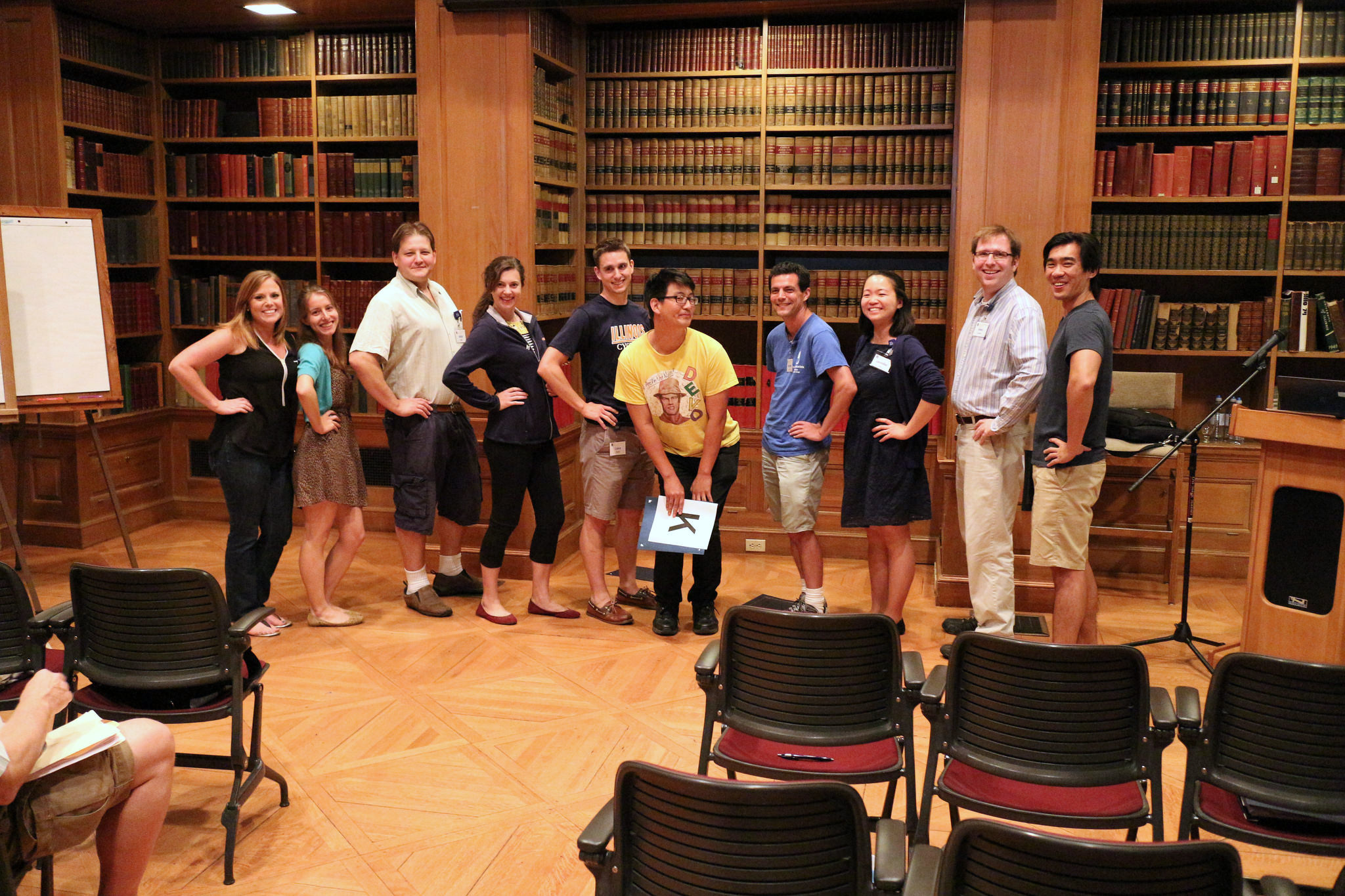
My MD/PhD program at our 2019 retreat.

Funding

This is so important. Medical training is ridiculously expensive and committing to the extra years of research training cuts away at your years where you can make actual attending physician-level money. Luckily, *most* MD/PhD programs that I’m aware of offer tuition waivers to relieve the burden of medical school debt. However, I have heard of at least one program where students are responsible for a portion of their medical school tuition.

Importantly, all programs should provide a stipend for all years of training. Usually, these are similar to the stipends of normal PhD students, so somewhere around $20,000-$30,000 for the year (this depends on the school, department, and cost of living in the area). Some programs have a Medical Scientist Training Program (MSTP) grant, which they use to fund their students and provide a stipend throughout the entirety of their MD/PhD training. People often use “MSTP” as an equivalent of the term “MD/PhD program”, but there are only 50 schools with this funding status. So, these terms are NOT the same (as a non-MSTP MD/PhD student, this is definitely a pet peeve).

Other programs rely on different funding mechanisms to support their students. For example, my program provides a stipend while we’re in our medical school years, but during our PhD years, we are funded like any other PhD student. This means if our advisors are able to afford a research assistant appointment for us, then we get our stipend that way. Otherwise, we have to work as teaching assistants on top of doing our research to get our stipend. PhD programs often have teaching as a requirement for getting a PhD, so this was fine for me though I did have to do more than my department required. Some MD/PhD programs waive these teaching requirements.

Another funding option that MD/PhD students are encouraged to apply for is the Ruth L. Kirchstein Individual Predoctoral National Research Service Award (NRSA). The F30 award is specifically for MD/PhD and other Dual Degree Fellowships. There is also a F31 award for predoctoral students but not specifically those also completing a medical degree. Note that these are funded by the National Institutes of Health and are only available for U.S. citizens or permanent residents. I was fortunate to be awarded a F30 grant and will hopefully be able to write more about these awards in another post and will update with a link when it is published.

Other things to consider

Is the program in an area of the country that you want to live? Are there people doing research there that you’d want to work with (see my post How to pick a research lab)? How good are the hospitals that you’ll train at? Are there opportunities to experience rural/urban health? Do they effectively promote diversity and inclusion in their program/at their campus? Do students feel like the administration listens to them?


Featured photo: Adapted from @MDPhDToBe on Instagram

Almost Docs: How to pick a research lab

This was originally shared on www.almostdocs.com (which no longer exists???) While I thought I had re-published all of my important articles from that site last year, I guess I missed this one. 🤷🏻‍♀️ Please note that I wrote this in 2014!!!

Whether you’re a pre-med who wants to build your resume for medical school, a medical student who wants to fill a free summer, or a graduate student, you’re probably going to be doing research. Before you jump in to trying to join a research group, I am here to warn you that not every research environment is equal (as I’ve learned the hard way, which sort of makes me an expert so you probably heed my warning). If you do it right, there is a lot to consider when finding a research advisor that is best for you, which is ultimately what’s important.

If the thought of picking a research advisor makes you feel a little like this:

Then this list of considerations is for you.

1. What area of research do you want to be in?

First things first, you need to narrow down your options. Often this will be in your major or graduate program area, so hopefully you’ve already had a chance to reflect on this. Do you want to do biology or engineering or anthropology? Whatever it is, look for professors who are doing research in that area.

2. Does your personality fit with that of the Primary Investigator (PI)?

Before asking to join a lab, it is essential that you reach out to the PI (or the professor in charge of the lab, for those who do not know). Talk to them about their research and the lab environment and by doing so, try to gauge how well you would work together. The PI will be your primary advisor in the lab and you need to make sure that you will be able to work with them and be successful.

3. How involved is the PI in their students?

Some PIs expect a detailed schedule of their students’ work and oversee it closely while others lay back and don’t keep a close watch on their students at all. Of course these are the extremes, but you will find PIs along a whole spectrum of involvement. Depending on your work ethic and confidence, one extreme or the other may be better for you. It is important to understand how you work to understand what you’re looking for in a PI. Remember, if a PI is more laid back, you will have to be more driven and independent to get the work done. On the other hand, if you’re more independent, a PI that sort of hovers will be quite frustrating.

Also, ask the students in the lab about the PI. You may find out even more information to sway your decision (such as if the PI has a short temper – true story).

4. How much do students have control of their own project?

This related to #3 and mostly pertains to those students in graduate school. To become an independent researcher (as is the goal of graduate school), you need practice planning your own research. If your PI doesn’t let you do much of the planning, you won’t get this experience and you might get stuck doing work that you do not want to do.

5. Do students get adequate guidance?

How often do students in the lab meet with the PI? Are there regularly scheduled individual meetings? Do they have to present regularly at group meeting? Does the PI have an open door policy? Is the PI always traveling? Are there senior scientists, post docs, or senior grad students in the lab that can provide guidance as well? Research is based on mentorship and you need a mentor that will be available to you.If you’re new to research, especially, figure out whom you will be working with and if you will be able to work well with them. Will they be a strong supporter of your development as a researcher?

6. How large is the lab?

A large lab may mean getting lost within the students and not having adequate access to the PI, but it also means having lots of students to rely on and work with as well as greater resources. A small lab likely means a more personal environment but possibly less equipment. Will a small lab be adequate for the research that you would want to do? How personal of an experience do you want?

7. Do you get along with the students?

You will likely be spending most of your time with the other students in the lab rather than the PI. It is quite important that you will be able to get along with them otherwise working in the lab may not be the greatest experience. How close are the students? Are there cliques? Does your personality fit within the group? Do they like to chat? Do they like to chat so much that it affects work time? Do they hang out outside of lab? Being social and working well together is great. Being too social and not getting enough work done is not so great.

8. Will they pay you?

Oh, the ever so important issue – money. As a novice to research, it is often expected that at least initially you will be volunteering in the lab. Perhaps if the PI has enough money, they will be able to pay you eventually, which is an important thing to figure out early on. For graduate students, this will determine whether you will have to do additional outside work to make your money.

9. If you’re a grad student, will you have to TA?

Going along with #8, the usual way for graduate students to earn their stipend other than being paid by their PI is to serve as a teaching assistant. Of course, this takes away time for doing research, which is what you’re there to do (unless you’re an awesome person who also likes to teach!) Many programs require at least some TA experience, but depending on the PI’s funding level you may need to do more than required. Also, if you’re not comfortable with teaching/have no interest in doing it, you also may not want to join a lab that will require it for your pay.

10. How well funded is the lab?

Money isn’t just essential for your pay; it is essential for the research. Does the PI have enough money to do the work that you will be doing or will you be restricted by funds? This can likely affect your success in the lab if you cannot do the work that you need to do to get results.

10. How much time is expected from you?

Does the PI want 10 hours a week or 70 hours a week? Do they not care about the time as long as you get the work done? Do they require you to work on weekends? Most of us try to have lives outside of lab, so this is an incredibly important consideration and the required time can vary drastically.

11. How long does it normally take for students in the lab to complete their degree/publish a paper?

Being published is a major measure for the success of a researcher. If you want to publish as an undergrad or a medical student, it is important to try to feel out the chance that you would get published from your work in the time that you have. If you are a grad student, you want to make sure that you will be able to publish in an adequate amount of time since you usually need to publish to get your degree.

12. Where does the lab normally publish?

Not every research journal is equal. Some hold much more prestige than others and many people look at where people publish as a marker of their success not just if they publish. If this is important to you, look to the PI’s papers and see where they tend to publish. It is important to note that often publishing in the top journals requires much more data, which means it likely takes longer to produce a paper for journals of that caliber, so that might also be a deterrent.

13. What is the specific research topic in the lab?

Finally, we’ve reached the topic that many make a mistake by considering too greatly. Sure you picked a field of research in your first consideration, but you haven’t yet considered the exact topic in the lab. There’s a reason – it honestly isn’t that important as a trainee. If you’re going to be doing research as your career, then you’ll have more freedom to study what you want, but as a trainee, the most important thing is becoming skilled as a researcher. Maybe you want to study RNA splicing in liver development but you end up studying signaling pathways in neurogenesis. Guess what, you’re still doing research and getting the experience that you need to move on to the next step in your career path. Picking a broad topic within your field of choice – such as cancer like me – can be a good idea as a basis for your career, but don’t pick a specific area that restricts your choice of labs, which may make it harder to find a lab that fulfills the other considerations.

Now with this guide, go forth and find a research lab that is best for you and discover great things!

Why MD/PhD?

“Why MD/PhD?” is probably the most frequently asked question that I somehow haven’t appropriately addressed yet on my blog. I have multiple drafts of posts that go back years that I never felt were ready for the world. I’m changing that now.

To answer this question, I must first answer another –

Why become a physician-scientist?

The general goal of MD/PhD programs is to train physician-scientists, but that is not the only way to become a physician-scientist.

The general definition of physician-scientists is that they are medical doctors who are also trained to do research and typically spend the majority of their time doing so. These medical doctors could have a MD or DO degree, or a MBBS degree if they trained internationally. They do not necessarily have to do residency training and become a licensed practicing physician. They also may or may not have a PhD. They can also get sufficient training during residency/fellowship or another post-doctoral research experience that would prepare them to become an independent researcher. And as team-based research is coming in to prominence, they may also not necessarily spend the majority of their time during research or it may be difficult to distinguish their clinical and research time if they’re involved in clinical research.

Whichever way you approach this career path, it’s a long road. So why do people do it? One reason is that the physician-scientist is uniquely positioned to effectively answer questions that arise in the clinic. For example, say you’re an astute physician who noticed a family with high levels of cholesterol in their blood and are more likely to have heart attacks at a young age. You ask whether the cholesterol is high because 1) more of it is being produced or 2) because it’s not being taken up by cells. You decide to take a sample of their cells and grow them outside a body. By treating these cells and a non-affected person’s cells with a labeled cholesterol-containing lipoprotein, you find that the affected cells do not take up cholesterol like the non-affected cells. Therefore, the cholesterol cannot provide feedback to the cell to tell it to stop making even more cholesterol! 😱 There must be something on the cell surface that is responsible for taking up cholesterol that is missing from the affected patient. Turns out, this something was the low-density lipoprotein (LDL) receptor (LDLR).

The physician-scientists in this case were Joe Goldstein and Michael Brown, who ultimately won the Nobel Prize for their work on cholesterol. Their findings were the first to show a biological process called receptor-mediated endocytosis, but they were also instrumental in showing how statins work to reduce cholesterol levels in the blood. Statins are now taken by more than 30 million people worldwide to reduce their risk of heart attacks. Neither of these physician-scientists have a PhD, but both did fellowship training in biochemical genetics at the National Institutes of Health where they had some clinical responsibility while also training in basic science.

It is important to note that not all physician-scientists are biologists like Brown and Goldstein. While this is a more traditional area of focus for physician-scientists, a physician-scientist can specialize in virtually any area of research. For example, my MD/PhD program has trained a remarkably diverse set of physician-scientists with research areas from engineering to neuroscience and biochemistry to anthropology and music. They can also be found in all medical specialties from surgery to internal medicine to psychiatry. The important thing is that whatever research area they pursue, ideally the physician-scientist would focus their research on a question related to human health.

There is a need for more diversity and inclusion in the physician-scientist workforce. Here is a paper that I co-wrote calling for a more broad discussion of diversity in the workforce that goes beyond gender and ethnicity: Diversity and the Next Generation Physician-Scientist.

But really, why MD/PhD?

Since I’ve just told you that physician-scientists do not need both a MD and PhD, let’s get back to the question at hand – “Why MD/PhD?” To fully answer this question, there’s a couple other FAQs to answer:

  1. If you want to do research, why do the MD? You can most certainly do research without the MD. You can even do research that is quite clinically oriented and you can collaborate with MDs to get patient samples. So why the MD? From how I see it, the MD lets you take your research one step further and get direct input from the clinic. Maybe you’re trained as a pathologist and built a skillset reading histology during your clinical training so that you don’t have to collaborate with a pathologist for your research. Or maybe you’re practicing as a pathologist and you find something novel in the patient slides you’re looking at that you can investigate further in your lab. Maybe you shift your research focus from how to kill cancer cells to studying how cancer/cancer treatment causes nausea or other side effects because your patients frequently cite that as a major influence on their daily quality of life. Or, at a more fundamental level, you simply want to care for patients as part of your career because it brings fulfillment and meaning to your life. 🙌 These are just some examples how training as a physician can complement a research career.
  2. If you don’t need a PhD to be a physician-scientist, why do the PhD? A majority of physician-scientists do not have a PhD. Unfortunately, this is subset of physician-scientists that is facing the largest decline. Training in a PhD program provides rigorous and structured research training that is not included in the basic medicine curriculum. Typically, this is the only time of one’s career development that is solely dedicated to research. In any other case, there will be clinical and/or teaching duties that distract from the research at hand. Many fellowship and some residency programs encourage research, and by having a PhD in advance, you are more likely to hit the ground running. There is a large learning curve that often gets overlooked regarding topics such as experimental design, statistics, etc. – aka the responsible conduct of research – that are barely discussed in med school. Doing a PhD gives you time to develop your critical thinking skills and understanding of these areas.
MSP Retreat Committee
With some of my MD/PhD classmates in 2015 (📷: UIUC Medical Scholars Program)

So why did I decide to do MD/PhD? 

I had always thought I had to choose between a career in research and a career in medicine – I initially chose the former. I felt that the ultimate contribution I would like to make in the world was the creation of new knowledge, preferably knowledge that would have a somewhat direct link to improving human health. Then I found out about MD/PhD programs and the opportunity to combine research and medical careers, which was exactly what I was looking for, largely for the reasons described above.

While my research and clinical interests have evolved, my ultimate approach to my career remains quite similar. I wrote in my MD/PhD personal statement that I wanted to study cancer. My course led me to liver cancer then to liver disease and metabolism more broadly. Writing this as I begin my 8th year as a MD/PhD student and 3rd year of medical school, I know that I want to both practice medicine and do research, but I still do not know exactly how I want my career to look. Will I do more basic research like my PhD? Will I do more clinical research? Will I be more involved in advocacy and healthcare leadership? Only time will tell. Nonetheless, I am confident that the MD/PhD path was right for me and will prepare me for whichever direction my career takes me.


Featured photo: Physician-scientist and Nobel Laureate Eric Kandel (center) with some cool physician-scientist trainees (📷: American Physician Scientists Association)

Two pandemics

The world we live in is being dramatically shaped by the COVID-19 pandemic. There is new information coming out every day, new policy changes, and more people sick and dying from the disease. As a student of medicine and simply as a human, it has been overwhelming to try to keep up, to help. I am by no means an infectious disease or public health expert and so I have tried to leave the education to much smarter people than me. But I will say, please continue to take it seriously, stay safe, and care for those around you.

A good resource that is updated daily is the American College of Physicians COVID-19 resource guide.

Additionally, please check out the recent piece from the American College of Physician leadership entitled The Collision of COVID-19 and the U.S. Health System. A particularly meaningful quote from this article is:

‘This pandemic has ripped the seams of the U.S. health care system wide open, thrusting front and center our health care inequities and injustices.’

It is time to make a change.

Please note that I have held volunteer positions in the American College of Physicians, including Chair of the Council of Student Members, but on this site I speak for myself and myself only.


The second pandemic has been going on much longer. It is racism. Racism is a barrier to health equity and is a public health crisis. There are many different types of racism (definitions from the Alberta Civil Liberties Research Centre):

  • Individual racism: “An individual’s racist assumptions, beliefs or behaviours and is ‘a form of racial discrimination that stems from conscious and unconscious, personal prejudice'”. This is learned from /connected to our culture/history and can be expressed in many ways (definitions adapted from @DaniBeck on twitter – link to thread):
    • Micro-assaults: Explicit expressions meant to hurt others (example: wearing confederate flag clothing or saying “go back to where you came from”).
    • Micro-insults: Insensitive communication that is demeaning (example: an employee asking a colleague of color how they got their job, implying they may have landed it through affirmative action).
    • Micro-invalidation: Ignoring the psychological thoughts, feelings, or experiential reality of a person of color (example: asking “Where are you really from?” after someone has already answered the question)
  • Systemic racism: “Includes the policies and practices entrenched in established institutions, which result in the exclusion or promotion of designated groups.” Subsets of this are:
    • Institutional racism: “Racial discrimination that derives from individuals carrying out the dictates of others who are prejudiced or of a prejudiced society.”
    • Structural racism: “Inequalities rooted in the system-wide operation of a society that excludes substantial numbers of members of particular groups from significant participation in major social institutions.”

As a person of European descent, I cannot begin to understand the pain that my Black and other non-White community members experience. However, I can continue to listen and learn how to be a better ally and use my platform to amplify their voices. I plan to develop a FAQ page that can serve as a FREE, comprehensive resource for those aspiring to go to medical school and/or graduate school and within this page, I plan to link to as many relevant non-White perspectives as I can (if you have any particular questions that you want answered, please use the contact page or reach out on Twitter).

I also always welcome guest posts from students about their personal experience in any aspect of MD/PhD training (though I understand that writing for free for a little med school blog is not the most bang for your buck). If you’re interested, again, please use the contact page or reach out on Twitter.

In the meantime, you can find a list of some of the voices that I am listening to in this Twitter thread.

I will end with two quotes from the book White Fragility: Why It’s So Hard for White People to Talk About Racism by Robin DiAngelo that I hope my fellow White allies take to heart:

‘I believe that white progressives cause the most daily damage to people of color. I define a white progressive as any white person who thinks he or she is not racist, or is less racist, or in the “choir”, or already “gets it.” White progressives can be the most difficult for people of color because, to the degree that we think we have arrived, we will put our energy into making sure that others see us as having arrived. None of our energy will go into what we need to be doing for the rest of our lives: engaging in ongoing self-awareness, continuing education, relationship building, and actual antiracist practice. White progressives do indeed uphold and perpetuate racism, but our defensiveness and certitude make it virtually impossible to explain to us how we do so.’

‘If, however, I understand racism as a system into which I was socialized, I can receive feedback on my problematic racial patterns as a helpful way to support my learning and growth. One of the greatest social fears for a white person is being told that something that we have said or done is racially problematic. Yet when someone lets us know that we have just done such a thing, rather than respond with gratitude and relief (after all, now that we are informed, we won’t do it again), we often respond with anger and denial. Such moments can be experienced as something valuable, even if temporarily painful, only after we accept that racism is unavoidable and that it is impossible to completely escape having developed problematic racial assumptions and behaviors.’