College graduation: An educational privilege and charge

Think of your thirteen or fourteen closest friends and family members. How many of them have college degrees or are pursuing a college degree? If you’re someone like me, it’s most of them.

As a recent college grad soon bound for medical school and graduate school, my world has been focused on those within higher education. This narrowed view has made me feel much less successful with my A- GPA than those who graduated with highest distinction and honors, and I feel much more capable than those with any lower GPA in my graduating class. Same goes for any other matter of comparison – test scores, experiences, etc.

But if those fourteen or fifteen people that you first thought of represented the world, only one of them would have a college degree. One.

That’s right, just 6.7% of the world has a college degree. Many more were likely accepted to college and didn’t finish and even more than that want to go to college but don’t have the capability.

While we may not be the top of our class, we are still learning and achieving something not a lot of people get to do, and it educationally sets us as leaders of the world. But to have the opportunity, the skills, and the determination to receive a college education is something so many of us take for granted.

Now a college degree isn’t required to be highly successful or to do what you are passionate about, but for many of us it helps us along a career path that can hopefully make a difference in the world if we use our education to its fullest potential.

College graduates, welcome to the 6.7% percent. What are you going to do with this opportunity? Will you accept the charge to use it to its fullest potential?

Advice for pre-pharmacy students

A couple days ago, I was asked on my ask.fm account, ask.fm/MDPhDToBe, the following question:

“You mentioned that you wanted to go to pharmacy school initially, why? What advice could you give to pre-pharm students? What made you change your mind?”

And my response was:

“I was actually first pre-med at the start of high school, but then decided I wanted to do pharmacy instead during my first summer of volunteering at a hospital because I didn’t think I’d want the extensive patient contact (I was rather shy). I wanted whatever I did to contribute to healthcare and I liked pharmacy’s emphasis on drugs and drug interactions.

When I came to college, I was overwhelmed with the amount of people wanting to do pharmacy, and so I wanted to do something different. Also, it was at this time that I was introduced to research and became fascinated with genetics research and the possibility of designing personalized medicine. And so, I changed to wanting to do research that contributed to the design of drugs – as I still want to. It’s not like I completely decided against pharmacy but rather that I incorporated my interest in pharmacy into another way of contributing to health care.

As for my advice, I’ll tell you what a pharmacist that I shadowed in high school told me. Learn chemistry. Lots and lots of chemistry. In fact, her advice was a major reason that I decided to take AP chemistry in high school, which led to majoring in chemistry in college. Also, if your college has a pharmacy school, look to see if they offer courses for undergraduate students. Mine did and so through it I have taken Introduction to Pharmacy, Applied Medical Terminology, Non-Prescription Medications and Self-Care, and Drugs and the U.S. Healthcare System, which all would be helpful classes for the pre-pharm student. My favorite was definitely Drugs and the U.S. Healthcare System because it was an online forum class that we seriously just read about and discussed issues with pharmaceuticals in the healthcare system and what could be done to fix those issues. It was very stimulating and helped me learn a ton about the pharmaceutical industry and ethical issues that doctors and pharmacists face!”

BUT WAIT! THERE’S MORE! I talked to one of my best friends and fellow lab mate who was just accepted to pharmacy school this year (yay her!) for any advice she would have for a pre-pharmacy student. Here’s her biggest piece of advice:

When deciding which classes to take, make sure to check what classes are required by the pharmacy schools you plan on applying to! Their requirements are not as consistent as medical schools. For example, she only took one semester of biology because our school’s pharmacy school only required that, but most colleges require two semesters, which severely limited her options for schools. Also, some are more picky about which classes will fill their requirements. So have schools in mind when you plan what classes you take in undergrad so that you can make sure that you fulfill ALL of the requirements.

Best of luck! 🙂

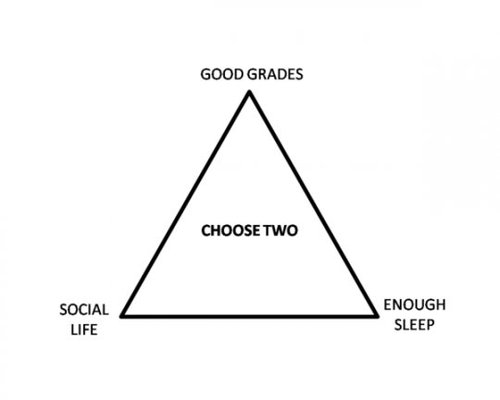
Can you have good grades, a social life, AND sleep?

Let’s just call it my worst semester ever. My extensive coursework, work in a research lab, extracurriculars, desire to exercise at the rec center at least 4 days a week, and barely there social life pushed back my sleep to a mere average of 3-4 hours a night. No joke. It even had a hashtag on twitter, #sleeplesssemester. Sure I started drinking espresso straight, using my shot glasses for shots of espresso rather than alcohol, but still I was able to stay up late at night, sleeping on the couch for just 15 minute naps then continuing with my work. Now I try to stay up late, but those 15-minute naps on the couch often turn into hours and when I finally wake up, I realize it’s time to simply go to bed. I miss having those extra hours to be productive while the world slept. This leaves me wondering how can I do it again?

Image

As usually said with the pyramid above, “Welcome to college, you can only pick two.” Prioritizing grades and a social life, it is generally known that the college years are those of likely little sleep, or at least little sleep when it is most appropriate – staying up late to finish school work just to have class early the next day. Coffee, pop, and energy drinks can only help us stay awake for so long. We find sleep when we can in the midst of our lives, but far too often it is sacrificed. Instead, we use our time to master knowledge for our classes, but we forget to master the most important lesson – how to sleep effectively.

Not all sleep is equal; this is easy to forget. When you sleep, you’re not like a battery being charged at a constant rate. How well recharged you feel and how easily you can wake up is dependent on the length you sleep as well as how well you sleep and the consistency of your sleep pattern.

Back during my #sleeplesssemester, I got in a habit of going to bed at 3-4 am and getting up at 6-7 am each day during the week with just a little fluctuation. Now that I work overnight shifts, some nights I sleep 12am-8am, some I sleep 6am-10am, and some I sleep 7:30pm-3:30am (like last night… oops!). This inconsistency makes it hard then to wake up in the morning, which is one of my bigger struggles of the day and makes it very tempting to skip class or go in to work later.

Also back during my #sleeplesssemester, I studied on one couch but I slept on another, but in my new apartment, I now nap on the same couch that I study. It is said to help people fall asleep at night to only use the bed for sleep – no studying or anything else in the bed. Perhaps that can go the other way as well to say ONLY sleep in bed. It may be hard to do when tired and the couch is so convenient, but it helps remove the association that it’s ok to stay asleep on the couch for long periods that could result in 15 minute naps turning into hours.

Sleeping on the couch for so long also gets me into deeper sleep than the 15 minute naps that I intend. After sleeping for hours on the couch and going through the sleep cycle, waking up at some point in it and having to then get ready for bed, climb into bed, and fall asleep again disturbs the sleep cycle making it much less effective. It is as if that time spent sleeping on the couch did nothing to help me feel more rested.

It seems counterproductive to focus on sleep when trying to figure out how to stay up later. But from noticing my sleep habits, I now know of ways that I can try to sleep more efficiently so that I can be able to stay up late when I want to. Only sleeping in my bed, napping on a different piece of furniture than I study, realizing when I need sleep and actually going to bed, trying to wake up at a consistent time each day will all hopefully help me feel more rested and will help me get the time back in my day that I want.

Mastering sleep can begin with acknowledging the faults in your sleep schedule and figuring out how you can fix them. Each person is different and so it may take some trial and error to figure out what works best, but being more aware of your sleep patterns and sleep quality can help improve your sleep efficiency, your energy level, and your overall productivity level. In turn, this can help you reach a little closer to the sleep corner of the triangle without having to sacrifice good grades or a social life! Yes you don’t have to just pick two!

Update 2/5/14: I am now in a combined MD/PhD program and I no longer work random overnight shifts. This previous summer, I went cold turkey on my caffeine addiction and focused on sleeping more each night. While my daily cup of coffee routine has returned as a student (because I originally started drinking coffee simply because I like the taste of coffee), I am sleeping 7-8 hours every night and I haven’t felt so awake in many years! While I have a lot on my plate currently, I have found that getting extra sleep hasn’t affected my ability to get everything done at all, in fact I feel that it has helped immensely!

How to write your personal statement

Writing your personal statement? Here’s what you need to do:

1. Go to http://www.accepted.com/medical/5flawsmed.pdf?utm_source=Publicaster&utm_medium=email&utm_campaign=Sub_Med5FF&utm_term=click+here+now

2. Read it

3. Reflect on how the information you read may help you write your statement

4. Repeat 2 & 3 until truly inspired to write

5. Write an awesome personal statement! (2 & 3 can continue to be repeated throughout the process)

QED

If I Could Do It Again

I wrote. Then I rewrote. Then I started over and rewrote again. Soon, the words began to blur together. I couldn’t make sense what I had covered in which piece. I read my work out loud to have a better idea of how it flowed but even still that lost its meaning. I made leaps of logic that I weren’t aware of because it was my own life and my hopes and wishes that I was covering. I was writing medical school personal statements.

writers block

Hindsight is 20/20 and since I was near having to reapply this year, I began looking back at my application to plan for try number two. Luckily, my last ditch effort ended up for the best and I have found a home for the next eight years at the University of Illinois. Nonetheless, this process had begun and I wanted it to be worthwhile, so I am sharing it with you! Each person’s statements are different – their experiences, their goals, everything – but perhaps my reflection on my own personal statements will help you write your own.

For your reference you can find my final personal statements here:

MD personal statement: https://mdphdtobe.wordpress.com/2013/03/28/amcas-m-d-personal-statement/

MD/PhD personal statement: https://mdphdtobe.wordpress.com/2013/03/28/amcas-m-d-ph-d-personal-statement/

Research personal statement: https://mdphdtobe.wordpress.com/2013/03/28/amcas-research-personal-statement/

.

LEARN FROM THE COMPLEXITY OF OTHERS

I used many stories about patients and experiences at the hospital for my MD personal statement. This statement was the one that I spent the most time on, and it was also the one that I am most satisfied with. If I did it again, I would likely use my grandmother’s experience with bladder cancer and ultimately her death as my main story to connect everything. *I would not be cheesy and say that this inspired me to go into medicine, I would emphasize what I learned about the complexity of health (in that it is much more than physical), what I learned about treating the elderly, and what I learned about death.

I was pretty satisfied with my personal statement from last year though, so here’s the things that I got good feedback about:

My story with an elderly man that I met at the hospital was likely the best one I included. I had multiple interviewers show interest in it. It showed that while I understand the importance of science in medicine, I have grown to appreciate the other sides of human health. Our health is extremely complex and is based on physical, psychological, emotional, and spiritual factors, but we are mainly trained to be scientists that focus on the physical component of health as premeds.

I found it helpful to use this statement to show that I am much more than a scientist and can appreciate all the factors that contribute to the well being of others to show my maturity and understanding of health. Actual patient experience to back it up was key. This was my primary concern since I didn’t add M.D. on to my goals until the end of my junior year of college and so I felt that I needed to work harder to show my interest in the human side of medicine to convince committees that I truly wanted the M.D. in addition to the Ph.D.

This emphasis on other factors of health was also incorporated in my interviews. I was asked in one if I believed that there was a psychological factor to health and I responded with a resounding “YES!” I’m taking a health psychology course in my last semester of undergrad (which I highly recommend) that gave me talking points and has helped me understand even more about the complexity of human health still from a researcher’s perspective.

.

ILLUSTRATE THE COMPLEMENTARY

For my MD/PhD statement, I emphasized the complementary motivation arising from being involved in both clinical and lab endeavors. I said it would help me maintain my motivation and thus would make me a better physician scientist. Then I interviewed for a Medical Scientist Training Program and in one discussion, the professor made me realize how cool it was that when I see someone receiving chemotherapy, I see the drug undergoing chemical reactions such as the drug I study that binds to proteins and DNA. Additionally, I can easily connect simple chemical reactions to a whole body (as I describe here: https://mdphdtobe.wordpress.com/2013/03/29/when-i-synthesize-my-molecule/). If I had done it again, I would have emphasized this by perhaps explicitly describing these observations and how I see them as related. I thought it would be an interesting lead into the statement.

.

RESEARCH DOESN’T HAVE TO BE BORING

Yeah we’re scientists, but that doesn’t mean we have to only write like one.

Though I was talking about my scientific research experience, that doesn’t mean that I couldn’t make it a story. The people reading your personal statement are highly educated, but they may not be experts in a similar area as you are. You have to educate and excite them about what you’ve done! My research personal statement was mainly about what I actually did in my research and less about my feelings toward research. I did explain why I chose to do the research and why I switched between labs to give a little more meaning to my statement, but my focus was that I understood the time given to research. While it was essential for me to establish that I understand and have experienced the research process, I wish that I had expressed my feelings about research more to the committee.

If I had done it again, I would open by explaining my trials with my research then transition into the first time there was an indication that I had succeeded at making the molecule I was trying to make. I would have talked about how great of a feeling it was to accomplish something that no one had ever done before! This would show that I appreciate not only the difficulty of research but also that I live for the worthwhile feeling of discovery!

.

I will update this as I think of other things. Best of luck on your applications! And never forget to let your passion shine through. 🙂

The Difference a Year Makes

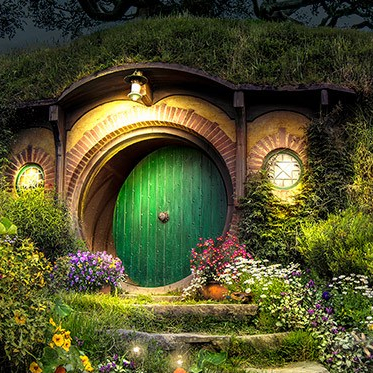
“It’s a dangerous business, Frodo, going out your door. You step onto the road, and if you don’t keep your feet, there’s no knowing where you might be swept off to.”  –Bilbo Baggins


A year ago, I thought I knew what I wanted to do with my life. I had it all planned out. For years I knew what I wanted was to get my PhD, become a professor of pharmacology, and research the design of anticancer drugs. It was straightforward and it is what I had prepared for years to do. All I had to do was commit 5 or so years to graduate school, a few years to post doctoral training, and my career could begin. Then on March 14, 2012, just two days before taking the GRE in my junior year of college, I sat in my lab researching schools for graduate school and discovered the Medical Scientist Training Program and was swept off to somewhere I never thought I would be.

With a controlling father who worked in the medical field and insisted that I become a doctor, I was exposed to yet repulsed by medicine from a young age. Luckily, I was not completely pushed away from health careers. As a teenager, I would have to defend pharmacy as a legitimate medical career, which he felt was beneath my potential. The same occurred in college as my goals shifted to medical research and drug design as he lacked an appreciation of the importance of scientific research in medicine. While the differences between these careers are subtle in scope, he made them feel like polar opposites. This polarity made considering pursuing an MD along with a PhD not a slight deviation in my life, but a complete revolution.

Such a major life decision is not made in minutes or hours but in days. Thirty-four days to be precise. I tried to keep my dilemma on the down low, eager to not lead my friends to think that I would be settling if, after deliberation, I chose to only pursue a Ph.D. Perhaps it was also so that I would not feel that way myself. I met with my advisor about it who referred me to a pharmacology professor who suggested I speak with the director of the Medical Scientist Training Program on campus. While I hoped that these meetings would help me find an answer, they only gave me more questions. I caved and had to make my friends and family aware, and with a simple tweet on April 17, I found my answer. “Do the dual degree program. Then you can never regret not doing it.” My mom’s cousin said what I know now was the answer in the back of my head the whole time.

The decision was made. I signed up for the MCAT, a test students fret over for months or even years, giving myself a single month following the school year to prepare myself mentally and intellectually for the most important test that I have ever taken. Luckily, having taken the GRE and the chemistry GRE in the three months before the test while completing a difficult semester had me in the focused mindset for such preparation. As the kind of person that will buy a textbook not required for class and read it during breaks from school, I actually enjoyed studying for the test. I took a broad range of science courses including the pre-med requirements “for fun” so studying for the test was essentially just review of my first three years of college, a well-received refresher. While studying, I pushed myself past the point of exhaustion to delirium, unknown until after taking the exam. That day, June 21, I came across pictures of sleeping cats on the internet I and laughed so hard I cried before taking one of the best naps of my life! (Seriously, check them out: http://www.buzzfeed.com/paws/awkward-cat-sleeping-positions and http://www.buzzfeed.com/paws/more-awkward-cat-sleeping-positions). Nonetheless, I survived and my score was just one below my ridiculously high goal. I had overcome one major milestone in my pursuit of an acceptance to the program.

Reading, memorizing, and taking practice tests to prepare for the MCAT and taking the actual test, that was easy. What was much more difficult was the personal journal of self-understanding that I undertook over the next month as I wrote my personal statements. Between the MD, MD/PhD, and research statements, I have 45 documents of various versions of these statements saved on my computer that can document this journey. I learned to verbalize my aspirations, realized my values, and remembered experiences in my life that were long forgotten but had actually helped shape my career goals. At my receptionist job, I spent the whole time writing just to go to my research job and spend my down time there writing as well. As I volunteered in an oncology clinic, as I walked around campus, and as I fell asleep at night, I would brainstorm ways to better these statements. I truly lived and breathed my writing and a month after taking the MCAT, I submitted my AMCAS application on July 25 much more aware of who I am as a person than before I undertook the task.

Since then, I have written dozens of secondary applications, paid $1,500 in application fees, and continued to push myself through college knowing that I would need to keep up this pace in medical school. Instead of taking basic science courses like green chemistry and human genetics, I decided to take courses like science writing and health psychology to help prepare me for other ways of thinking than the technical pure scientific mindset. My hard work on my application paid off and I was invited to interview at the University of Minnesota on December 21. While I did not get in, I learned even more about myself, realizing how special it was to feel so excited about something so small as being able to do a reaction that no one has done before or how cool it was that when I see a person getting chemotherapy, I see the chemical reactions going on inside their body. This experience made me appreciate my four years at the University of Minnesota so much more and prepared me for my next medical school interview.

Today, February 28, 2013, nearly a year after I was swept away by the opportunities available for me to combine science and medicine, I go to interview at the University of Illinois’s Medical Scholar’s Program. Never in my life did I seriously imagine that I would be destined for medical school, and now I am interviewing for the second one. It is things like this that show that we are always growing, no matter how certain we are about our lives. Had I not been so open minded to other opportunities, I would have never considered this program and would never have felt so enlightened about my path in life. But this is not the end. Who knows where I will expand my horizons next, but I await the opportunity.

~

Featured photo source: Day to Night at Bag End by Tanya Willis | Shift Art