My last summer

Since I graduated from college this May and start more school this August, this truly is my last summer. For in August, I begin an eight-year program where I will spend my summers doing research, working in clinics, and studying. I will have left the world of the student who pays for schooling, and enter a grown-up world where my education is truly my job.

So what to do with the last summer free from most responsibility and worries of my life? Surely, I must make the most of it.

First, I wanted to something crazy, something totally out of the ordinary for me, something that wasn’t research or clinical, something that put me more in touch with humanity. As I thought of jobs that could fit this description, I thought of barista. Making coffee and interacting with customers is a great way to make small talk and meet a lot of people. Although I had worked as a barista before, it isn’t like any job or activity I had done in the past 3 years and so it was out of the ordinary for who I have become. Alas, a very short interview with Starbucks killed that dream as their training takes nearly as long as I would be able to work there.

Next, I gave up on it not being research related as I found an internship that was available at a local pharmaceutical company. I thought that it would be good to get experience in a non-academic research environment so that I know what I’m missing out in academia. I updated my resume and wrote a cover letter, things that I had not really had to do since my previous jobs at my university were much easier to get and perhaps required only a CV. Alas, I was not who they were looking for.

I was at a loss. I did not want to get a job as a cashier at Target or some other place though that is where I would likely be able to find a job for such a short time. I did the cashier thing for nearly 4 years of my life and enough is enough. But by a rather unfortunate circumstance, I found a way to spend my summer that is much more out of the ordinary and meaningful than anything else I could have chosen to do.

And so, here I am. It’s a Friday night in June, the rain is pouring outside, the wind is howling, the power is out, and I sit in the nearly empty house that was once my grandparents’, alone, listening to the sound of the storm, and reading through letters my grandfather received from his friends while he served in World War II. I have spent much of my summer here, cleaning, organizing, throwing things away, donating some to good will, and doling out what I can to the rest of my family, and I couldn’t imagine a better summer.

This was a creepy, classic, spider-infested basement room after I cleaned it out.

This past April, my grandmother passed away from cancer leaving my nearly ninety year old grandfather without a caretaker. He moved in with my aunt leaving their home where my grandparents’ had lived for 58 years without tenants. This is where I come in. It is now my job, along with my mother, to clean out this house so full of memories so that new tenants can call this place home. It is where my mother grew up and it is where I spent much of my childhood as well including spending a summer living with my grandparents’ after my freshman year of college. It is a place that will be hard to say good-bye to.

I have taken advantage of this opportunity to learn as much as possible about my family. I’ve learned about my grandfather’s time as a marine in World War II and his time as a professor of forestry at the University of Minnesota. I’ve learned about how my grandparents met as a blind date and fell in love at first sight. I’ve learned of the summer they lived in a 50-foot tall fire lookout tower in Idaho and I hope to get the story my grandmother wrote about the experience published. It is in learning about their past that I am more amazed at the people they grew up to be.
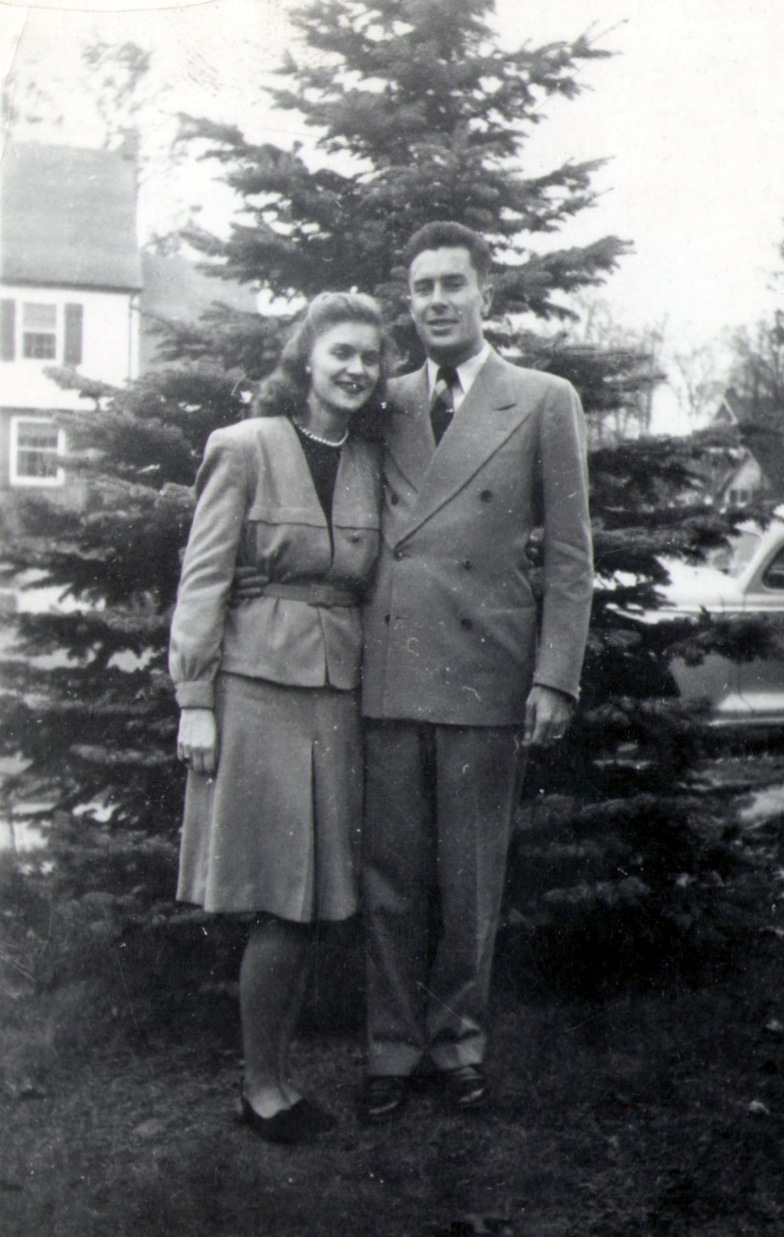
My grandparents in 1946 - one month after they started dating.
My grandparents in 1946 – one month after they started dating.

Even more, I’ve gone beyond my grandparents’ time to learn about those who came before them. Through the hundred of pictures I’ve scanned and the stories my grandmother has written, I’ve learned about my great-grandparents, great- great-grandparents and beyond. Through my grandparents’ records, I was able to put 320 people on our family tree. Joining ancestry.com got me to over 1,000. I learned that my great- great- great-grandfather immigrated from Ireland and was a member of the Stone Masons. I learned that I come from two lines of knights of England (Strickland and Ketchum/Knyvett). I learned that the first couple to get married in America who came in the Mayflower, John Alden and Priscilla Mulline, are my 10th great grandparents. I learned that Benjamin Rush who was a doctor and signed the declaration of independence is my 5th great grand uncle. I’ve learned that I’m mostly English with some Norweigan, Irish, Scottish, Swedish, and German in my blood and now know when most of those ancestors came to America.

2013-06-04 15.23.36
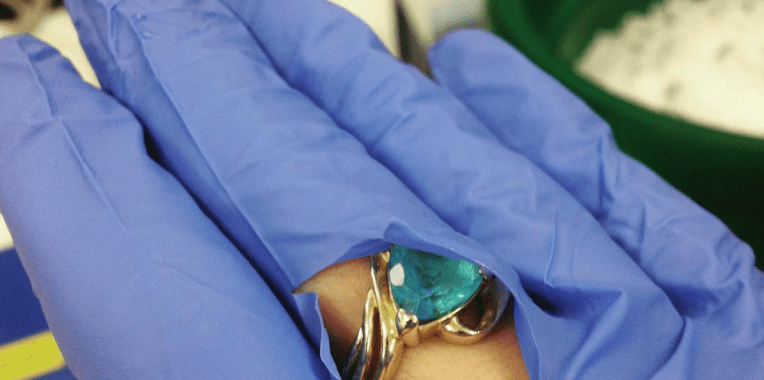
My great- great-grandmother’s wedding shoes and an old bible.

I’ve also found relics of the past. I’ve found bibles from the 1800s with the names, births, and deaths of my ancestors recorded, wedding shoes that were my great- great-grandmother’s, a dresser scarf that was hand stitched by my great- great- grandmother, war pins from the Civil War and World War II, crystal lamp bases of my great-grandmother’s, and the plates my great-grandparents received as wedding gifts. Seeing these things, touching these things, is like reaching out and touching my ancestors. I’m holding something that they once held, something that was once new and special to them, and it has been passed on so that I have the fortune to have it too.

It is amazing how much history you can find in a single house.

So how does this relate to my goals for the summer?

Is it crazy? Well, I have been able to obsess over this project for the past month, so it lets me get crazy about it.

Is it something totally out of the ordinary for me? Well, I’m absolutely terrified of spiders and even more about house centipedes and I hate dirty basements, which is just what I’ve had to clean out this summer. My mother says that if we’re supposed to do something every day that scares us that she and I are good for many years.

Does it put me more in touch with humanity? I’ve learned who my ancestors are. I’ve touched things they’ve touched. I’ve learned where I come from, what role my family has played in society. I’ve learned more about how I fit in this world. Yes, I’d say I’m more in touch with humanity.

It’s not always pretty, it’s a lot of work, but I’m enjoying every minute of it, and as I’ve said, I cannot imagine a better summer. My search for a way to spend my summer was not at all a loss nonetheless, for the day I interviewed with Starbucks, I had to stop by my grandparents’ house to get their car to drive to the interview. That was the last time I saw my grandmother in a coherent state before I saw her on her last day with us. Clearly failures can be blessings in disguise. Being able to clear out her house and learn about he family is helping give me closure to say goodbye to my grandma and goodbye to the house where she and my grandfather lived. It’s saying goodbye to the life I know and it’s preparing me to move 8 hours away from home, to live completely by myself in a new state. It’s preparing me to truly live on my own.

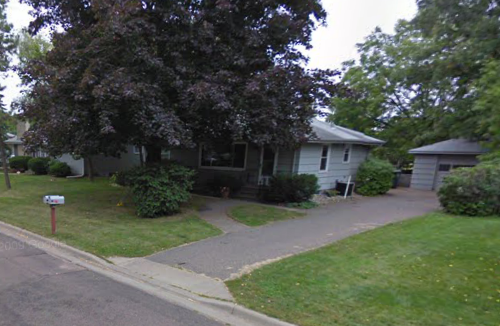
My grandparent's house.
My grandparent’s house.

I challenge you to think of how you would spend your last summer.


Featured image: Hanna Erickson

College graduation: An educational privilege and charge

Think of your thirteen or fourteen closest friends and family members. How many of them have college degrees or are pursuing a college degree? If you’re someone like me, it’s most of them.

As a recent college grad soon bound for medical school and graduate school, my world has been focused on those within higher education. This narrowed view has made me feel much less successful with my A- GPA than those who graduated with highest distinction and honors, and I feel much more capable than those with any lower GPA in my graduating class. Same goes for any other matter of comparison – test scores, experiences, etc.

But if those fourteen or fifteen people that you first thought of represented the world, only one of them would have a college degree. One.

That’s right, just 6.7% of the world has a college degree. Many more were likely accepted to college and didn’t finish and even more than that want to go to college but don’t have the capability.

While we may not be the top of our class, we are still learning and achieving something not a lot of people get to do, and it educationally sets us as leaders of the world. But to have the opportunity, the skills, and the determination to receive a college education is something so many of us take for granted.

Now a college degree isn’t required to be highly successful or to do what you are passionate about, but for many of us it helps us along a career path that can hopefully make a difference in the world if we use our education to its fullest potential.

College graduates, welcome to the 6.7% percent. What are you going to do with this opportunity? Will you accept the charge to use it to its fullest potential?

Lend a hand? Happily.

I’ve volunteered as long as I have been old enough to do so.

It started with girl scouts in elementary school where we would do various projects such as volunteering at a homeless shelter. It continued with volunteering at a hospital starting the summer after my freshman year of high school, participating volunteer opportunities with the national honor society later in high school, and leading a band service sorority in college.

I’ve had friends ask me why I do it, saying that I don’t get anything in return. Even those in NHS with me would only do the minimum volunteer hour requirements while I always did more.

Well, I did get something from it. It just wasn’t necessarily tangible.

What I got was happiness.

Research has shown that those with a greater interest in helping others rate themselves as more happy. It is believed that such acts may foster a charitable perception of others and one’s community, an increased sense of cooperation and interdependence, and an awareness of one’s good fortune.

People who willingly help others tend to feel more altruistic, confident, efficacious, in control, and optimistic about their ability to help.

Generosity can also inspire greater liking by others, as well as appreciation, gratitude, and pro-social reciprocity. It may also satisfy a basic human need for relatedness, which contributes to happiness.

So next time you have the opportunity to help others, I hope you take it. It may help boost your happiness.

The research is from: Lyubomirsky, S; Sheldon, K M; & Schkade, D. (2005). Pursuing happiness: The architecture of sustainable change. UC Riverside: Retrieved from: http://escholarship.org/uc/item/4v03h9gv

A growing problem

With the elderly proportion of the US population growing, bladder cancer may become more widespread in a population that is not well understood.

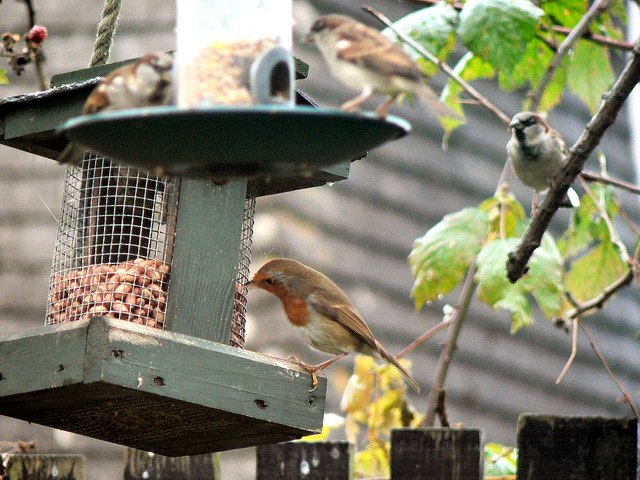
Robin on Bird Feeder
What my grandmother thought was outside her window – a robin on a bird feeder. Source: http://commons.wikimedia.org/wiki/File:Robin_and_House_Sparrows_on_bird_feeders_-_geograph.org.uk_-_1012920.jpg

I could barely recognize my grandmother’s frail body as she lay on a hospital bed in the room that was once her dining room. She asked what the weather was like outside. Fighting back tears, I told her it was a nice sunny day and there were robins on the bird feeders that she liked to watch on her deck. It was comforting to see her face light up at the thought, but I knew it was really a gloomy April day with no birds in sight.

I did everything that I could to not think of the tumor growing in her bladder that day, but like a tumor in my mind, the realization that this was her end was growing into an overwhelming force. Each time she exhaled, there would be a long pause where I would stroke her hand fearing she would never breathe again. Her sister told her what I did not have the strength to: “You are dying.” The family knew since her diagnosis that this day was coming soon.

It all began the previous August when my grandmother, a relatively healthy woman of 85, saw her doctor because she was experiencing painful urination and blood in her urine. These symptoms pointed toward a urinary tract infection (UTI), a condition that over half of women will get at least once in their lives. With a history of UTIs, she was given antibiotics and sent on her way.

The relief was short-lived. In September, the symptoms returned and she went back to the doctor. At her age with antibiotic treatment unable to completely dismiss the symptoms of a UTI, he knew something was up. She was referred to a urologist who used a camera to look insider her bladder, a technique known as a cystoscopy. This confirmed the family’s greatest fear – it was cancer.

Her age put her at higher risk for bladder cancer. Adjusting for population size, twice as many over 85 are diagnosed with bladder cancer than those in their 60s. Their cancers are also often at a more advanced stage, being over four times more likely to develop invasive bladder cancer. With the proportion of elderly in the US expected to double by 2030, the prominence of bladder cancer, especially more aggressive and invasive bladder cancer, will likely rise as the proportion of elderly increases. What’s worse is that unlike their younger counterparts, the elderly are less likely to receive thorough treatment of the disease and are more likely to die from it.

Considering her age, her oncologist gave her the option of extending her life with chemotherapy or relieving her symptoms with a surgery that could cut out as much of the tumor as possible. While chemotherapy would possibly come with complications such as high fevers and discomfort that are more problematic in the elderly, the surgery would be only palliative and so the tumor would likely grow again. Not wanting to extend her suffering, she opted for the surgery leaving her lifespan up to the growth of abnormal cells in her bladder.

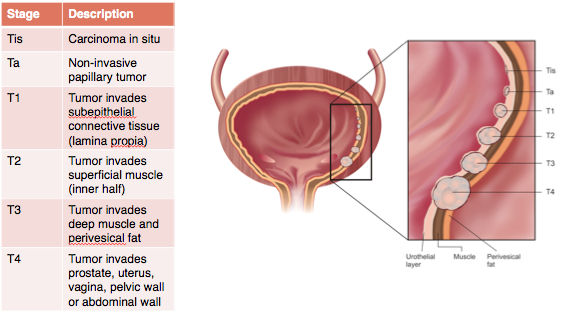
Screen shot 2013-04-30 at 6.28.39 PM
Stages of bladder cancer. Source: http://cxbladder.com/what_are_tumour_grades

Bladder cancer in the elderly is not well studied. While assumptions can be made from what is known about its effects on younger populations, the physical, mental, and social changes that occur with aging may lead to different disease outcomes. Because of this ambiguity, we were unsure whether my grandmother had a matter of years, months, weeks, or even days left with us.

To ease our worries about how long my grandmother had to live, her oncologist told her to have a scan in 3 months to check the cancer’s progression. Since it’s especially difficult to predict lifespan in elderly with the disease, this at least gave us a goal. For her, a more important goal was getting to Christmas when my cousin would be visiting from California and bringing her newborn son for my grandmother to meet for the first time.

For women, the prognosis of bladder cancer is less hopeful than for men as they are more likely to die in the first 3-4 years after diagnosis. Like my grandmother, they’re more likely to receive symptomatic treatment for a UTI within a year before being diagnosed with bladder cancer. This delay in diagnosis along with other prognostic variables such as age and tumor stage still only explains 30% of the excess mortality compared to men. The other 70% may be attributed to hormonal differences and other factors.

By the time my grandmother’s tumor was found it had reached the most advanced stage of cancer. It had invaded the epithelial layer of cells lining the bladder and had gone into the muscle. Her lymph nodes were also enlarged and her oncologist suspected that the cancer had spread there as well. I later learned that she could have been offered a radical cystectomy, a surgery where the bladder is removed and replaced with a piece of intestine that functions to hold urine like the bladder. This surgery is the gold standard for muscle-invasive bladder cancer.

Analysis of the SEER database, a government collection of surveillance, epidemiology, and end results regarding cancer, shows that of those patients with cancers needing this more invasive surgery, 55% of those aged 55-59 had the surgery while only 25% of those aged 70-79 did. Shahrokh Shariat, a distinguished professor of urology at Weill Cornell Medical College, hypothesized that this disparity may be due to the overuse of non-surgical alternatives, the inexperience of surgeons, or what was likely my grandmother’s case, the potential belief that older patients may not be able to tolerate the surgery.

2013-04-21 13.31.07
My grandparents’ wedding photo (1948)

Caring for her family has always played a large role in my grandmother’s life. After marrying my grandfather at 21, she raised three daughters who gave her seven grandchildren and three great-grandchildren. She supported us in our childhoods by teaching us piano, playing tennis with us late into her 70s, and doing everything else that she could to be involved in our lives. As her grandchildren grew up and needed less of her attention, she was then more capable of caring for my aging grandfather.

With her diagnosis, she went from caregiver for her 89-year-old husband to being needed to be cared for as well. She not only had to prepare his meals, take him to doctor appointments, and watch out for him falling, but she had to worry about her own health issues. The family that she helped raise stepped in to take some of the weight off of her shoulders, but we could only do so much to mitigate the strain of her disease on her mind and body.

Christmas soon arrived and she was able to hold her great-grandson in her arms for the first time. The most wonderful time of the year also meant that she had made it to the three-month mark and needed to have a scan to see how the cancer had progressed. After much anticipation, the results were in. “It grew,” her oncologist said, “But not as much as expected.” Any bit of positive news was good enough for us to celebrate.

gma maseo
My grandmother holding her great-grandson (2013)

This joy was only temporary. Early in February, she again saw blood in her urine that became heavier as the day passed. While she hoped it would go away, it did not. My aunt came to stay with her in case the blood loss affected her. They decided to call 911 and she was rushed to the hospital where she was tested for kidney function and bladder infection, but the tests came back fine meaning that her cancer was likely the culprit.

Her urologist suggested that she could try to repeat the surgery she had in the fall to alleviate these symptoms, and the next Friday she went in for late afternoon surgery. As it was minimally invasive, she was sent home later that evening without the nurses even checking if she could urinate. She couldn’t. My aunt brought her to the emergency room that night for a catheter, upset by the huge inconvenience brought upon them both.

Again, the relief was short lived. While the first surgery brought months of minimal symptoms of her disease, they returned just weeks after her second surgery. A difficult discussion with her doctor came to the conclusion that it was time for her to go on hospice, at-home palliative care. She would then be able to spend the rest of her life in the comfort of her own home with nurses visiting the house and medications coming by delivery.

The house where my grandmother spent her last days

While my grandmother’s health had been declining before, on hospice, it was plummeting. The pain she felt was not want she anticipated when opting to not do chemotherapy, and part of her regretted the choice. We reminded her of the complications associated with chemotherapy, which reassured her that she made the best decision considering her circumstances.

Concerned that her days were numbered, her sister flew in from Seattle to stay with her for the duration. An aunt from San Diego took the first flight she could, intending on being in Minnesota with the family as much as her job allowed. The cousin from California also came for a few days with her sons. “Everyone’s coming to visit me,” my grandmother said. “Am I dying?”

Over the month and a half she was on hospice, I watched my grandmother slowly succumb to the growth that manifested in her bladder. Her skin appeared paler and her energy level dropped. I’d often see her trying to do what she would have done normally – crossword puzzles, knitting, reading books – but really she’d just be staring off, lost in her own thoughts. She became confused, not remembering what happened which day or who said what. Her pain medications sedated her and she’d go in and out of consciousness mid-conversation.

Even more, she began feeling nauseous more often and went on anti-nausea medication. Its side effects were almost worse than the nausea itself. The foods that she once loved were no longer appealing to her. By Easter, she could barely keep anything down and watched us all eat our dinners while she struggled with some ice chips.

The human body has enough stored energy to go several weeks without food, but without fluids, a person has a matter of days left. On the morning of April 6, my grandmother tried to drink water but instead of it going to her stomach, it went into her lungs. The hospice nurse said to no longer give her water. It was her time to go.

I got to the house as soon as I could. My mother brought me to the dining room and I sat next to my grandmother’s hospital bed. Though there had been seven months since her diagnosis to prepare for this day, I couldn’t find the right words. Instead, I spoke with her about the weather and birds, anything simple that she’d know and love, and told her she looked beautiful. She’d ask for water, but all we could do is wet her mouth with a washcloth. In her frequent moments of confusion, she’d begin worrying about various things, but we didn’t know what she meant by her slurred words. “Don’t worry,” my mother said, “Today is just a day for you to relax.”

To not overwhelm my grandmother and give the rest of the family time to see her, I eventually said my goodbye and left. I waited the whole day for word that her suffering was over, longing for her to be at rest. Still she persisted through the afternoon and into the evening. At 10:24 p.m., a wave of relief swept over me as I read my mother’s text that said, “Grandma is at peace now!” Finally, we were all at peace.

Isle Royale’s drama of survival

 Surviving as a lone wolf is difficult, but for Isabelle, the winter of 2013 posed a greater challenge. Targeted by another female and her two companions, her life was in danger as they attacked with the intensity used to take down a full size moose, jaws clenching hard aiming to rip muscle from bone. Had these wolves known that Isabelle, a close relative to every male wolf on the island, had low reproduction potential, perhaps they would have realized that she was not a threat. But for her female assailant, she was seen as breeding competition to eliminate.

Image
Isabelle is cornered on the edge of a cliff following an attack. Blood stains the ground around her. Source: http://www.isleroyalewolf.org/node/123

Wolves have inhabited Isle Royale since 1949 when a pair crossed an ice bridge spanning the 20 miles of Lake Superior separating the island from the mainland. Their numbers rose until 1980 when their population size plummeted from 50, the all-time high, to 14 in just two years after evidence of a deadly canine parovirus was first seen in the blood of the animals. This population crash drastically shifted the wolves’ population dynamics. Before the crash, wolf numbers fluctuated based primarily on the number of older moose on the island, but after, there was little correlation. Instead, the genetic effects of their isolation took hold.

With a limited gene pool, wolves have become more inbred with each generation, allowing recessive traits that require inheriting a copy of the gene from both parents to become more common. For example, lumbosacral transitional vertebrae (LSTV), a recessive deformity of the spine that likely damages nerves controlling tails and hind legs, is normally seen in 1% of wolves but on Isle Royale, 33% have it. Such a deformity inhibits a wolf’s ability to hunt, making it difficult to get food necessary for survival.

Image
This graph shows the progression of the wolves’ inbreeding coefficient over a fifty-year period. Source: http://www.isleroyalewolf.org/data/data/home.html

While the level of inbreeding has increased over the years, introduction of a new set of genes with the arrival of an immigrant wolf rescued it and helped the population grow for a time. This wolf, nicknamed the Old Grey Guy, crossed another ice bridge to the island in 1997, and following his arrival, the population size rose again. The inbreeding coefficient, an indication of genetic diversity in the population measured from zero (non-relatives) to one (complete relatives), peaked around 2000 at 0.8 before falling to 0.1 just a few years later as the pups that the Old Grey Guy sired became a part of the adult population. This coefficient is on the rise yet again, reaching 0.3 in 2010 as his descendants become more prominent in the population. At the same time, the population size peaked at 30 in 2006 before dropping to nine wolves in 2012, the lowest observed number on the island in the 55-year study.

As the single remaining member of the Middle Pack, a specific wolf family on the island, Isabelle’s female assailant is likely the most genetically diverse female on Isle Royale. Such genetic diversity is necessary to produce offspring that do not have harmful recessive traits and so are capable of surviving. So, while Isabelle fights for her life, her assailant fights for the prolonged survival of wolves on the island. Nonetheless, the Old Grey Guy’s introduction of new genes shows that inbreeding is inevitable in the isolated population. The female assailant may be able to produce viable offspring for now, but the issue remains of the imminent decline of genetic diversity in future generations. This inbreeding will lead to a higher occurrence of harmful traits that will threaten the survival of the entire wolf population on the island.

After observing the population for 55 years, it is natural to care about the wolves and hope that they will continue to survive on the island. With the inevitable threat of dying out, it is tempting to seek ways to aid the population – in vitro fertilization, introducing new wolves, anything that can be done in desperation to bring genetic diversity to the island population to help them thrive. But this contradicts the belief that nature is meant to run its course without human intervention. John Vucetich, the lead researcher on Isle Royale, acknowledges this dilemma stating, “We have so much to learn about how we can relate to nature.”

Minnesota, Hail To Thee

Each year, the graduates and leaders in the University of Minnesota Marching Band get to write a letter to their peers as a way to end the season. I’m sharing mine from this year so that others can appreciate how meaningful of an experience I have had the fortune to experience in college. It wasn’t just an activity that I participated in. It is who I have become, which is all for the better. No matter what happens, music and this university will always be a large part of my life.

Image

As the saying goes, “The band does not become part of your life, you become part of the band’s life.” Over the past four years I have realized how true that is. We are but a fleeting moment in the history of the band and our duty to this band that we love is to carry on its legacy and to inspire others to feel the exact same love for it as we do because it’s such a great feeling that we ought to spread it with the world. But for us, this band doesn’t just become part of our lives; it becomes our entire life. It shapes who we are from the moment we enter it to the moment we leave and how we grow over these years remains with us for the rest of our lives.

Reflecting back to rookie year when everything was new and exciting and I had no idea what was going on, I am amazed by how much of an impact this band has had on me over the past four years. It was crazy to think as I watched the rookies learn to march this year that it was just a few years ago that I too was taking my first steps with the band – tucking and flat footed with low knees like a boss – and now chair step will always fixed in my muscle memory.  At first, being disciplined on the field, memorizing the extreme amounts of music, and sacrificing most weekends to band was a nuisance, but it now is a way of life. I have been shown what it truly is to be inspired and a quality person from the leadership of the directors, the upperclassmen before me, and now, my peers, and I know what I’ve learned from them will help me do great things in this world.

It is surreal to think as I write this that never again will I experience the glorious pain in my calves following the first few days of spat camp, run cadence out of the tunnels at TCF Band Stadium, or have a dance party in room 5 with the clarinets while staying at the stadium until at least midnight to help hem marching band pants during spat camp. Never again will I scare the rookies, watch the sun rise at 6 a.m. rehearsal, or have the honor to wear the 15-pound wool uniform (after the bowl game, that is). Returning members, cherish ever moment. No not just the happy moments when we put our hats on backwards at the end of the game or when you find out you made pregame or leadership, but the difficult and character building moments as well such as the humbling moment when you find out you didn’t make pregame when you were sure that you would, the strengthening moment when you don’t think you can make it through MN March down the field again but you push yourself to do so, or the moment of self discipline when you hold yourself at attention despite your exhaustion after marching all of pregame. Also, graduates, don’t ever forget these moments.

Over the past four years, I have met more people that mean so much to me than I could hope for in a lifetime – let alone individually mention here – and I am thankful for the opportunity to consider all of them my friends. In fact, I will always cherish everyone in this band whether I talk to you every day or I simply see you on the field. Your dedication, your energy, and your friendship inspire me every day and I would like to thank you all for making this some of the best years of my life. I joined this band looking for friendship, but I found something more – I found a family. I am fortunate to have spent some of the greatest years of my life with such a fantastic group of people. It has been an honor and a privilege to march along side each and every one of you.

Ski-U-Mah, my friends.

-Hanna